Lebanese mezze, a table that is almost all vegetarian
Why the Lebanese table puts vegetables at the centre, how to balance tahini and lemon, and how to build a mezze for guests.
Count the dishes on a Lebanese mezze table and see how many hold meat. Out of fifteen small plates, two or three do. Nobody made that decision. It falls out of the format: when a meal is built from many shared preparations, vegetables and pulses take the space, because they cost less, can be made ahead and are eaten cold.
The format sets the diet
Mezze is not a starter. It is the meal, spread over two hours, arriving in waves while everyone picks. The table opens with raw vegetables and dips, then the salads and warm preparations follow. Whatever comes off the grill arrives last.
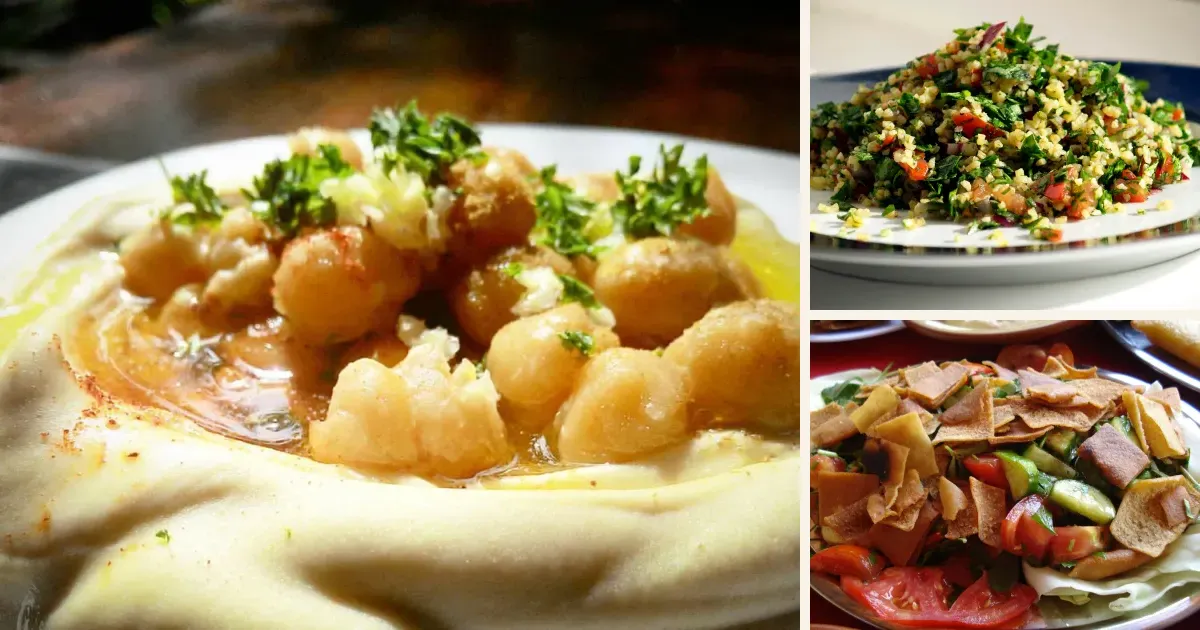
That arrangement explains why a vegetarian eats well in Lebanon without asking for anything. Hummus and baba ganoush open almost every table, one round and creamy, the other smoky and sharper, so they answer each other instead of repeating.
Tahini, lemon, olive oil
Two products govern the balance of a Lebanese plate: tahini, which brings fat and bitterness, and lemon, which brings acidity. Olive oil goes over the top to bind and to perfume. A dish that tastes dull to you is nearly always short of one of the first two.
Choosing a tahini
Choose your tahini with care. Good Lebanese or Palestinian tahini pours easily, sits pale in the jar, and keeps its bitterness quiet. The very dark industrial jars, made from over-roasted seeds, take over everything you put them in. Stir the jar before each use, since the oil always rises.
The move that makes hummus smooth
For smooth hummus, the move that matters concerns the tahini. Whisk it first with lemon juice and a little iced water: the mixture pales and thickens before it loosens. The chickpeas go in after that. Tahini stirred straight into the purée leaves a grainy texture that no blender will rescue.
Bulgur, the everyday grain
Rice takes the spotlight across much of the Levant, but bulgur remains the household grain of rural Lebanon. Durum wheat parboiled, dried and cracked, so it is cheap and quick to prepare.
| Grind | Use | Preparation |
|---|---|---|
| Fine, no. 1 | Tabbouleh, kibbeh | Cold soak, no cooking |
| Medium, no. 2 | Stuffings, warm salads | Soak in hot water |
| Coarse, no. 3 | Pilaf, simmered dishes | Cook like rice |
Tabbouleh shows how the grain gets misread abroad. In Lebanon it is a parsley salad in which bulgur plays a supporting part, a few spoonfuls to soak up the tomato and lemon juice. The tubbed supermarket version inverted the proportions.
The other great grain dish, mujaddara, sets lentils and rice under a heap of onions fried to a deep brown. Those onions take forty minutes and you cannot cut that short, because they supply the sweetness and the bitterness that carry the whole plate.
The Christian Lenten dishes
Lebanon’s Christian communities keep fasts that exclude animal products, and part of the plant repertoire comes from there. These are the siyami dishes, literally fasting dishes, cooked in olive oil instead of clarified butter.
Those fasts kept alive pulse recipes that the rest of the year might have let slip. Falafel belongs to that group, so long as you make it the old way: dried chickpeas soaked overnight and ground raw, never cooked first. Falafel made from tinned chickpeas falls apart in the oil, and that is the most common failure among cooks in a hurry.
Chickpea fatteh belongs to the same family: stale bread torn into pieces and warm chickpeas, under a yoghurt and tahini sauce whisked just before serving. The bread has to stay crisp beneath that sauce, so you assemble it at the last second.
Building a mezze for eight
Do not chase fifteen dishes. Six will do if you pick them for contrast rather than for count.
Take two dips, hummus and baba ganoush, both made the day before. Add two salads for acidity and crunch: tabbouleh and fattoush, the latter resting on fried pita and on sumac, the tart red powder that no amount of lemon juice reproduces exactly.
Finish with one substantial hot dish, mujaddara or falafel, and with bread. Zaatar manaqeesh, flatbreads spread with a mix of wild oregano and sumac lifted with sesame, bake in ten minutes and beat anything you would buy.
Bring it all out at once and set it in the middle. A mezze served in courses loses the thing that makes it work.