🌸 Spring vegetarian recipes
11 recipes
Spring in the northern hemisphere is the season of leaves and pods. After months of roots and squashes, spinach, peas, the first artichokes and the first strawberries come back to the market, and every dish on this page is built on one of them. It is a short season, and a thin one for a world atlas: it yields few vegetables, and none of them keeps.
Greece turns it into spanakopita, a pie in which a kilo of fresh spinach collapses between sheets of filo; the quantity alone says the spinach is the dish rather than the seasoning. Japan treats the same leaf in the opposite way: in spinach goma-ae it is blanched for a minute, squeezed dry and coated in a paste of toasted sesame. In Syria, ankinar bil zeit brings both signatures of the season together, artichoke hearts and peas braised in olive oil and served cold.
One thing worth stating plainly on a site that covers the whole world: the seasons named here are those of the northern hemisphere, and they are reversed south of the equator. As spring settles over Europe, autumn is beginning in Australia, Brazil, Argentina and South Africa. No season page on Vegetive names a month, because the same month is not the same season on the two sides of the equator.
Recipes are sorted on their ingredients and never on their country: a dish appears here only when a spring vegetable or fruit accounts for at least 75 g per serving, and only when it is fresh.
The recipes
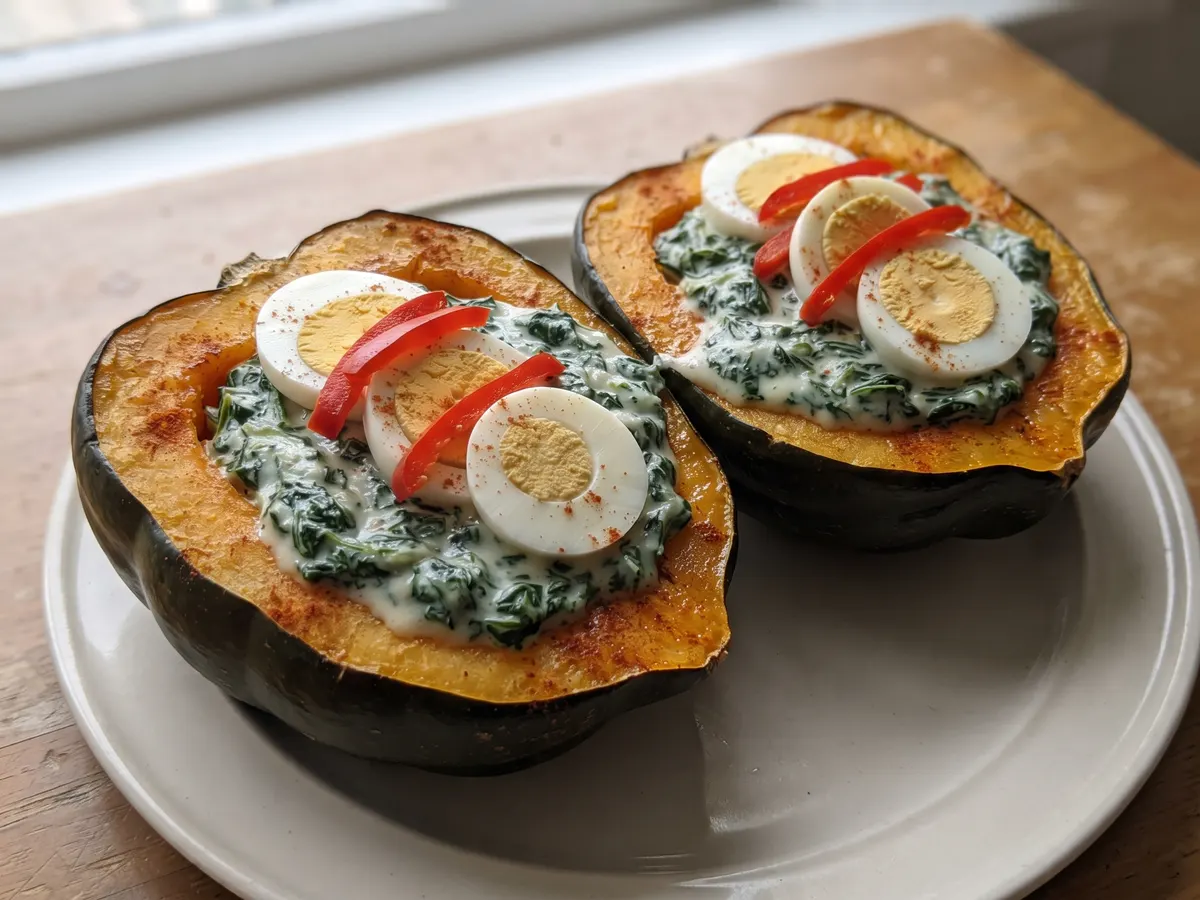 United States⏱ 70 min
Stuffed acorn squash
Stuffed acorn squash baked in halves with butter and paprika, filled with creamed spinach and hard-boiled egg, from an American recipe printed in 1936.
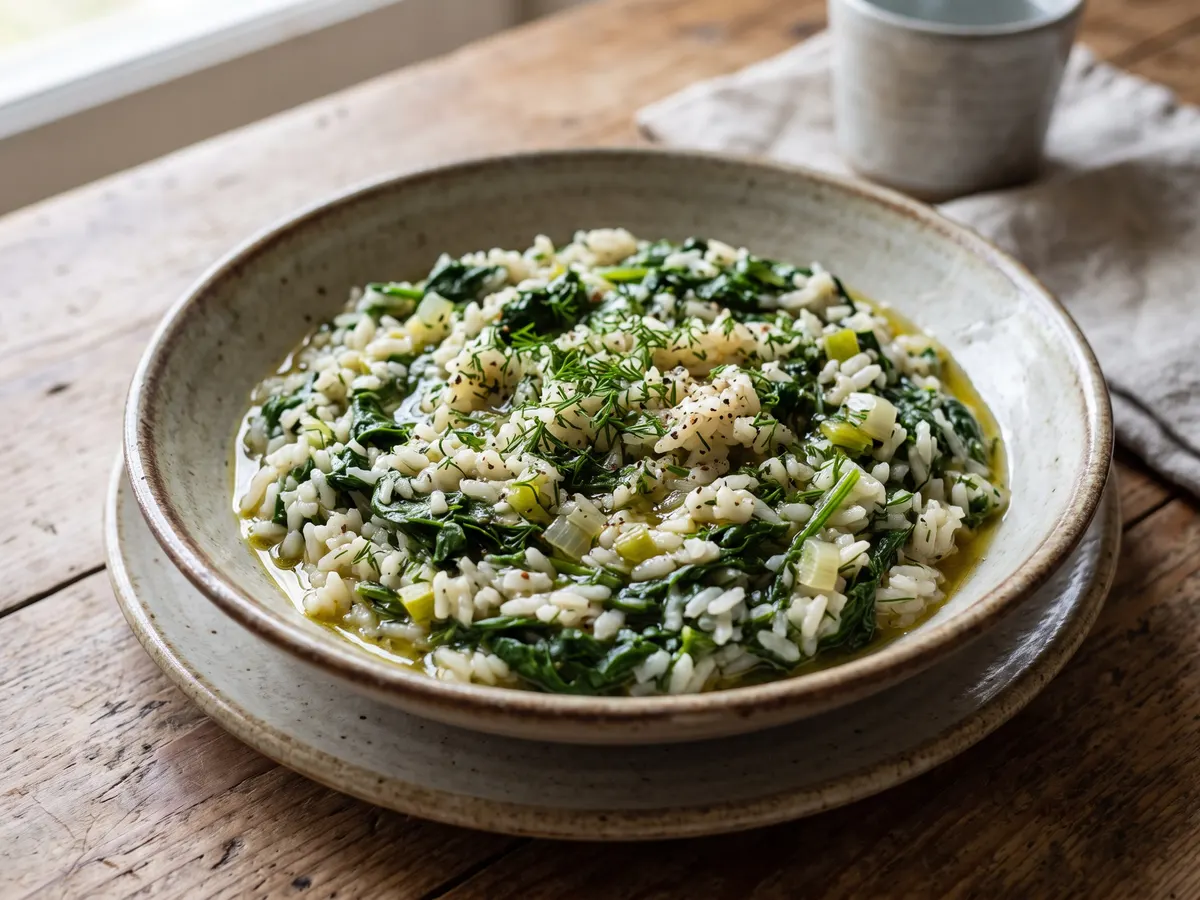 Greece⏱ 40 min
Spanakorizo
The beloved Greek home classic combining tender medium-grain rice with wilted fresh spinach, abundant dill, fragrant olive oil, and bright lemon.
 Syria⏱ 65 min
Ankinar bil Zeit
Syrian artichoke hearts braised in olive oil with peas and carrots, served cold with a wedge of lemon.
 Nigeria⏱ 55 min
Vegetarian egusi soup
Ground melon seeds cooked in red palm oil with tomato and chilli until they set into curds, then finished with spinach.
 India⏱ 95 min
Saag
Mustard greens and spinach stewed for an hour, thickened with maize flour and lifted by ginger and green chilli.
 Denmark⏱ 30 min
Rødgrød med fløde
Summer red berries cooked down and set with potato starch, then served cold under a pour of single cream.
 Argentina⏱ 55 min
Spinach empanadas
Golden Argentine baked pastries filled with silky spinach, sweet onion and ricotta, finished with a grating of nutmeg.
 Japan⏱ 15 min
Spinach goma-ae
Blanched, well-squeezed spinach dressed in a toasted sesame paste, lightly sweetened and salted with soy sauce.
 India⏱ 40 min
Palak paneer
This palak paneer recipe is a deep green spinach purée scented with ginger and garam masala, holding cubes of softly browned paneer.
 Algeria⏱ 40 min
Amekfoul
The Kabyle steamed-vegetable couscous, grains rolled in olive oil with peas and carrots, served with a hard-boiled egg.
 Greece⏱ 75 min
Spanakopita
This spanakopita is the Greek spinach and feta pie, layered between golden, shattering sheets of filo pastry.
Frequently asked questions
Which vegetables are in season in spring?
Spinach, peas, the first artichokes and the first strawberries — the four ingredients every recipe on this page is built on.
Is spring the same season everywhere in the world?
No. The seasons named here are those of the northern hemisphere. As spring settles over Europe, autumn is beginning in Australia, Brazil, Argentina and South Africa.
How does a recipe get classified on this page?
Only when a spring vegetable or fruit accounts for at least 75 g per serving, and only when it is fresh — never because the dish's country of origin merely suggests the season.