🌍 Vegetarian food in Africa
12countries·64recipes
In Africa, a meal without meat is almost never a sacrifice: it is the ordinary shape of everyday food. The structure repeats from one end of the continent to the other — a grain or a tuber that fills you up, a sauce that carries the flavour, and meat as an extra when there is any. In Kenya, white maize ugali is eaten with kale stewed in tomato, and Kikuyu githeri boils maize and red beans together into a complete meal. In Ivory Coast, fermented cassava becomes attiéké, and plantain foutou is pounded in a mortar before it meets its peanut sauce.
Ethiopia stands apart. The Orthodox calendar there sets aside close to two hundred days a year with no animal product at all, and out of that religious constraint grew the largest vegetarian repertoire on the continent: red lentil misir wot, ground chickpea shiro wat, collard gomen, all laid straight onto injera, the wide sour teff flatbread that serves as plate and cutlery at once.
To the north, semolina and olive oil take over, with seven-vegetable couscous, aubergine zaalouk and the harira of Ramadan evenings. Egypt built two national dishes on the broad bean and the lentil: morning ful medames and the koshari sold on every Cairo street. Further west it is seeds that supply both fat and protein — groundnuts thicken mafé, melon seeds make Nigerian egusi, and black-eyed peas are whipped into fried akara. Below you will find the countries of the region, how many recipes each one has, and enough to cook for a week.
The countries of this region
A selection of recipes
A sample taken country by country, so the best-stocked cuisine does not take up the whole page. Each country page has its full list.
 Ethiopia⏱ 25 min
Buticha
Chickpea flour whisked into water off the heat, sharpened with lemon and jalapeño, finished with olive oil.
 Morocco⏱ 20 min
Moroccan Orange and Cinnamon Salad
Cold orange rounds dusted with cinnamon and scented with orange blossom water, the standing dessert of Moroccan tables.
 Kenya⏱ 60 min
Kenyan chapati
A wheat flatbread rolled into a spiral then flattened, which pulls apart into thin layers once cooked.
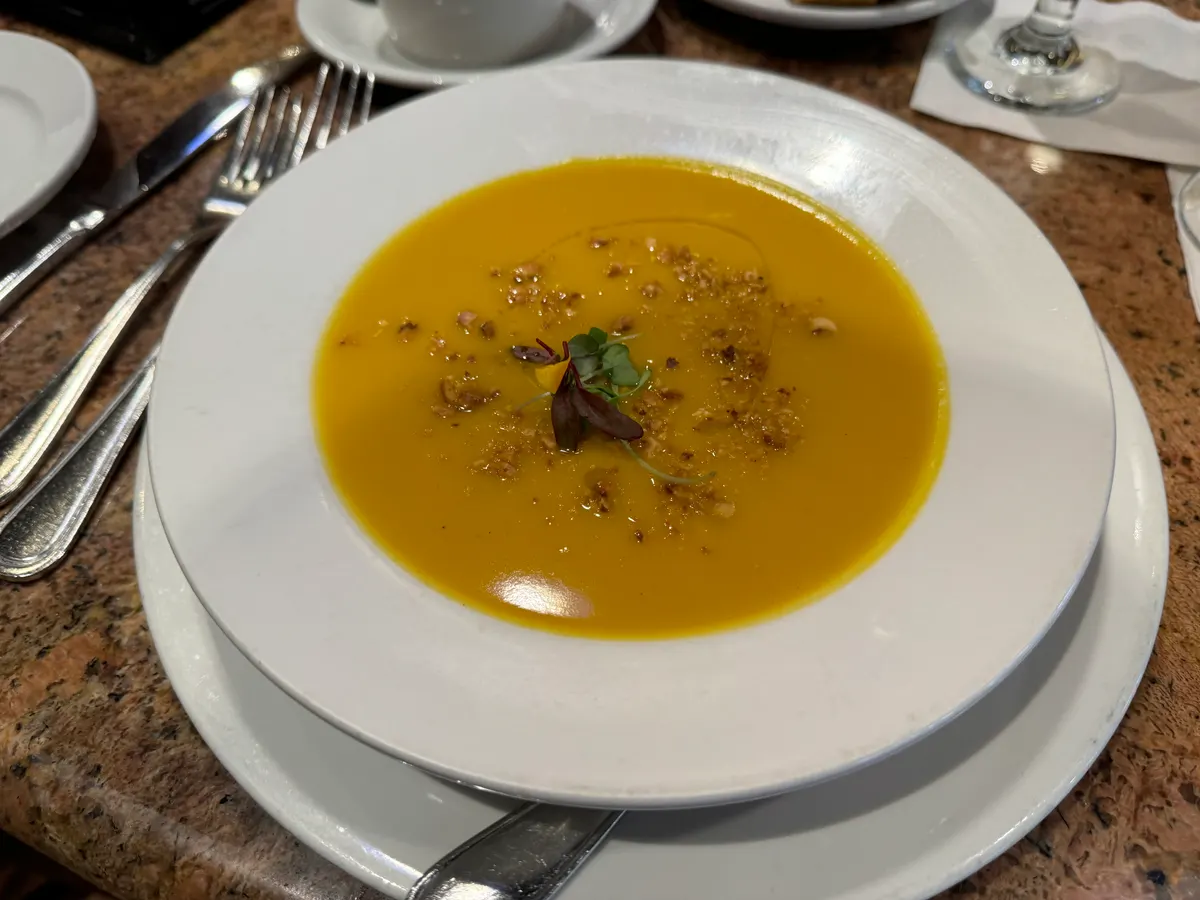 South Africa⏱ 50 min
Butternut squash soup
South African butternut squash soup, blended with onion and a tart apple, seasoned with nutmeg and served as a starter.
 Tunisia⏱ 45 min
Kafteji
Vegetables fried one by one then chopped on a board with eggs, a Tunisian cheap-eats dish served in an earthenware bowl.
 Senegal⏱ 45 min
Millet lakh with peanut cream
Steamed millet couscous drowned in a peanut cream, eaten at breakfast or at the end of the day in Senegal.
 Algeria⏱ 105 min
Cherchem
Cracked wheat and dried broad beans simmered together, eaten in the Aurès mountains to mark the end of winter.
 Ivory Coast⏱ 30 min
Claclo
This claclo recipe fries fritters of very ripe mashed plantain to a deep brown, sold on street corners across Abidjan.
 Nigeria⏱ 40 min
Puff puff
Sweet yeasted batter scented with nutmeg, dropped in balls into hot oil until they swell and turn golden.
 Egypt⏱ 25 min
Dukkah
An Egyptian blend of toasted hazelnuts, sesame and spices, coarsely crushed for dipping bread dunked in olive oil.
 Ghana⏱ 35 min
Hausa koko
The ginger and chilli millet porridge Ghana drinks at breakfast, with fried dough balls to dip in it.
 Réunion⏱ 35 min
Vegetable achards
Carrot, green bean and cabbage blanched then marinated in turmeric, ginger and garlic oil, eaten cold across Réunion.
Read more about this region
- Vegetarian Maghreb cooking, with nothing missing
What Morocco, Algeria and Tunisia share — semolina, pulses, olive oil — and how their everyday dishes stand up perfectly well without meat.
- Ethiopian cooking, vegetarian two days a week
How the Orthodox fasting calendar built a vegan gluten-free cuisine, and how to assemble your first shared injera platter at home.
- Meatless Moroccan cooking, from bessara to tagine
Bessara, zaalouk and taktouka are plant-based by tradition; harira, tagine and couscous, often made with meat or smen, work just as well without.
- High-fibre vegetarian meals built on whole grains
High-fibre vegetarian meals built on a whole or cracked grain and a pulse, told through eight real dishes, from Kenyan githeri to Ethiopian injera.