🍜 Vegetarian food in Asia
11countries·83recipes
Asia is the only region of the world where vegetarianism is a doctrine before it is a preference. India has more vegetarians than every other country combined, and its cooking never needed to invent a meat substitute: lentil dal tadka, rice-and-pulse khichdi and the fermented southern dosa are complete meals by construction. Nepal turned it into a daily rhythm with dal bhat, served twice a day, and kwati, a stew of nine sprouted pulses cooked for Janai Purnima.
Buddhism produced the other great tradition. The shojin cooking of Japanese temples revolves around tofu — yudofu poached in a kombu broth, spinach goma-ae — and it raises the one genuine difficulty of the region: dashi contains dried bonito, and it has to be rebuilt from kombu and shiitake. Every recipe on the site that leans on a dashi, a fish sauce or a shrimp paste says so and gives the swap. Chinese Buddha's delight comes out of the same monastic world.
Soy supplies the rest. Fermented into miso and doenjang it delivers the umami meat would otherwise provide, as in Korean doenjang jjigae; pressed into tofu it becomes the everyday protein; fermented whole in Java it becomes tempeh, whose firm bite and nutty taste have no Western equivalent. And from Kerala to Indonesia, coconut milk stands in for cream: Thai green curry, Malaysian laksa, Sri Lankan kiribath for feast days.
The countries of this region
A selection of recipes
A sample taken country by country, so the best-stocked cuisine does not take up the whole page. Each country page has its full list.
 India⏱ 70 min
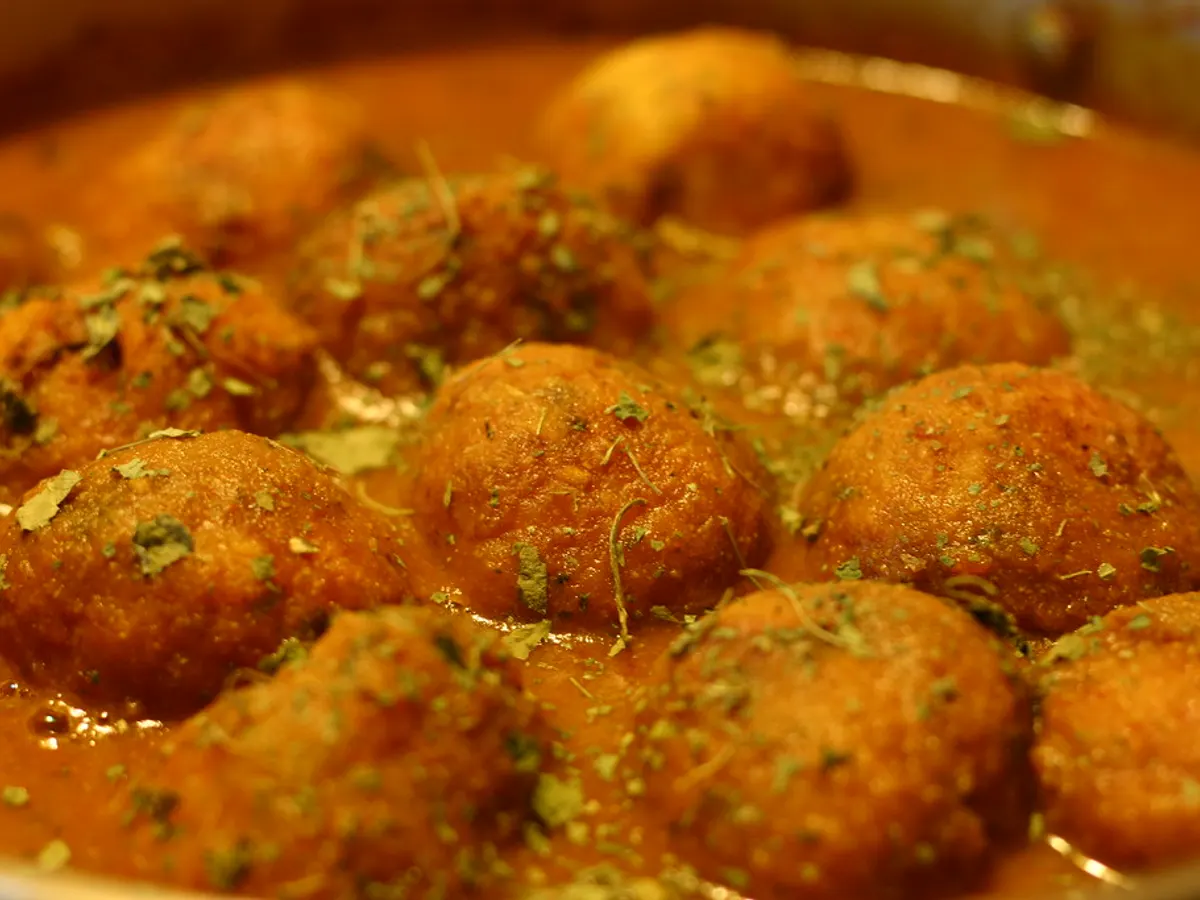
Malai kofta
Golden paneer and potato dumplings served in a velvety tomato, cashew and cream sauce scented with garam masala.
 Japan⏱ 35 min
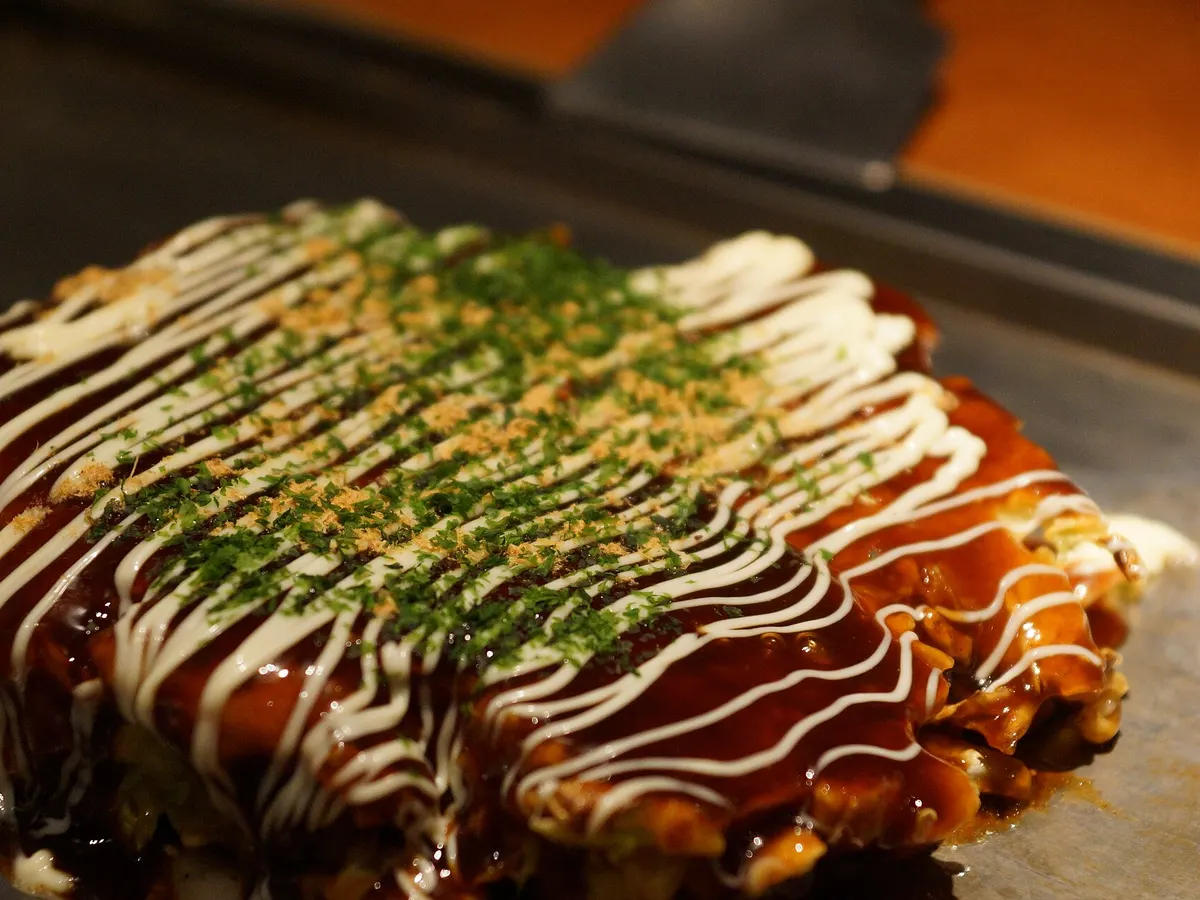
Cabbage okonomiyaki
Osaka's shredded-cabbage pancake, pan-cooked then covered in sweet-savoury sauce, mayonnaise and nori, here without dried bonito.
 China⏱ 55 min
Vegetable baozi
White yeasted buns pleated by hand around a cabbage and mushroom filling, then cooked in a steamer basket.
 South Korea⏱ 55 min
Mayak gimbap
Mini seaweed rolls of rice with carrot, yellow pickled radish and spinach, dipped in a mustard soy sauce.
 Thailand⏱ 50 min
Mango sticky rice
Warm glutinous rice steeped in sweet-salty coconut, served with ripe mango and toasted mung beans for crunch.
 Philippines⏱ 40 min
Ensaladang Talong
Filipino aubergine charred over a flame, peeled and topped with tomato, red onion and chopped hard-boiled egg.
 Malaysia⏱ 45 min
Cendol
An iced Penang dessert of green pandan noodles, coconut milk, red beans and palm sugar syrup.
 Sri Lanka⏱ 15 min
Lunu Miris
A Sri Lankan paste of red onion and chilli pounded in a mortar, spooned onto milk rice and morning hoppers.
 Nepal⏱ 40 min
Mula ko Achar
A Nepali relish of white radish simmered in a sesame tomato sauce, set beside rice at every meal.
 Indonesia⏱ 40 min
Pecel
Blanched vegetables under a peanut and kencur sauce, served with crisp rice crackers on the side.
 Vietnam⏱ 55 min
Cơm tấm chay
Broken rice served with grilled marinated tofu, pickled vegetables, scallion oil and a fish-free nuoc cham.
 India⏱ 40 min
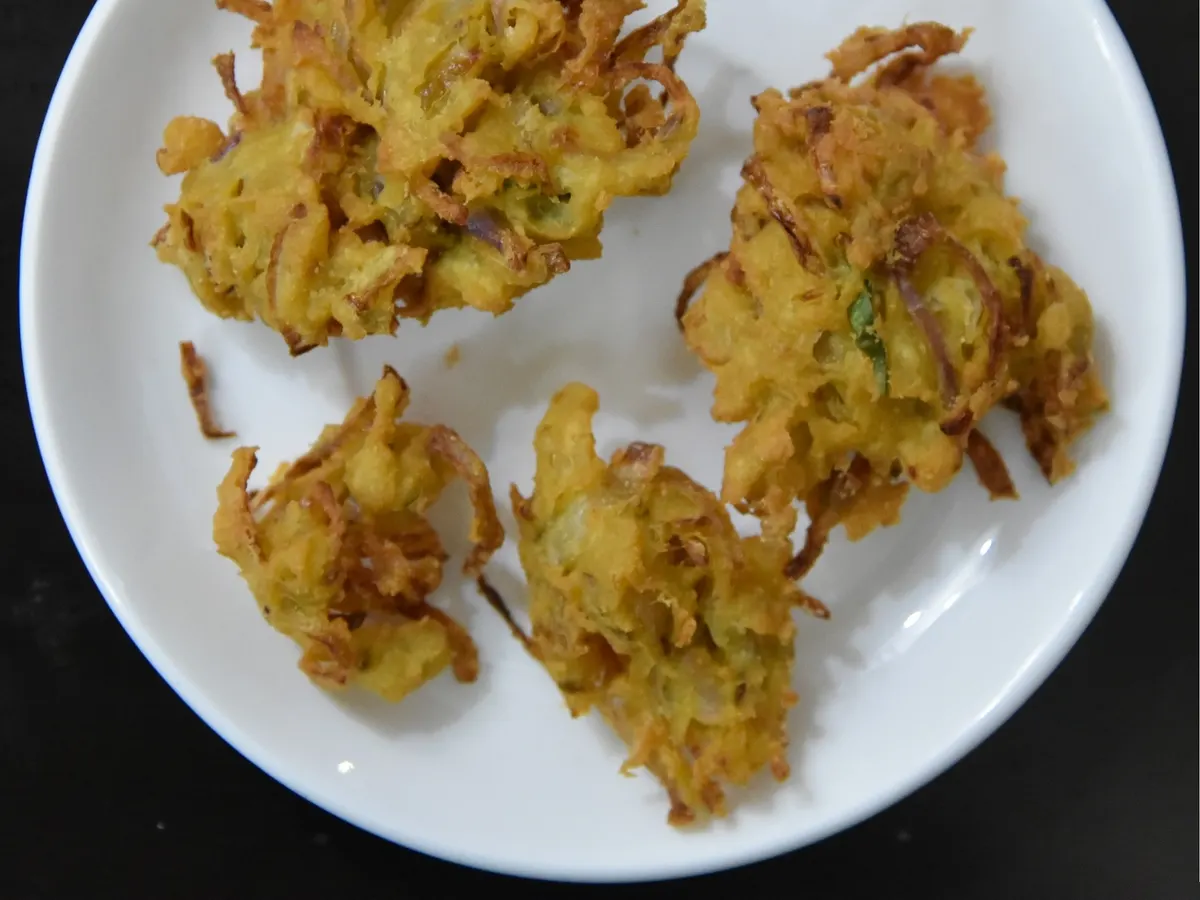
Vegetable pakoras
Indian fritters of onion, spinach and potato in a spiced chickpea-flour batter, crisp and naturally gluten-free.
Read more about this region
- Umami without meat in China, Japan and Korea
Fermented pastes, kombu and dried shiitake, tofu and high heat — four sources of flavour that stand in for meat in Chinese, Japanese and Korean cooking.
- Japanese vegetarian cooking, beyond sushi
Learn to make dashi without bonito, tell the forms of tofu apart, and build a Japanese vegetarian meal from small plates.
- Indian vegetarian cooking, where to begin
Learn the north-south divide, the tadka technique and the spices worth buying first so you can cook Indian food without meat.
- How to cook tofu so it is never bland
Why tofu is not a meat substitute but a carrier of flavour, and traditional Asian techniques to give it real depth and texture.