Vegetarian recipes from Japan
14 recipes
A guide to the food of Japan
Japanese vegetarian cooking, beyond sushiLearn to make dashi without bonito, tell the forms of tofu apart, and build a Japanese vegetarian meal from small plates.Meatless Japanese cooking rests on a simple base: short grain rice, soy in all its forms, and stock. Vegetable dashi is made from kombu and dried shiitake, which supply the glutamate and guanylate the flavour depends on; it carries the morning miso soup and the broth of vegan ramen alike. Tofu is not a substitute but an ingredient in its own right, served plain and hot in yudofu, or floured and fried in agedashi tofu. Fats stay discreet: a trickle of sesame oil, rarely butter. Seasoning comes from salt, miso, soy sauce, mirin and rice vinegar.
A meal is built around a bowl of rice, a soup and several small dishes rather than one centrepiece. Vegetables get short, precise treatments: blanched then bound with sesame paste in spinach goma ae, steeped in mild vinegar for sunomono, rolled with vinegared rice and nori for kappamaki. Cold dishes rank equal with hot ones, as zaru soba shows, served on a slatted tray with a dipping sauce. Rice also travels on its own as vegetable onigiri, and turns festive with the azuki beans of sekihan.
The recipes
 Japan⏱ 35 min
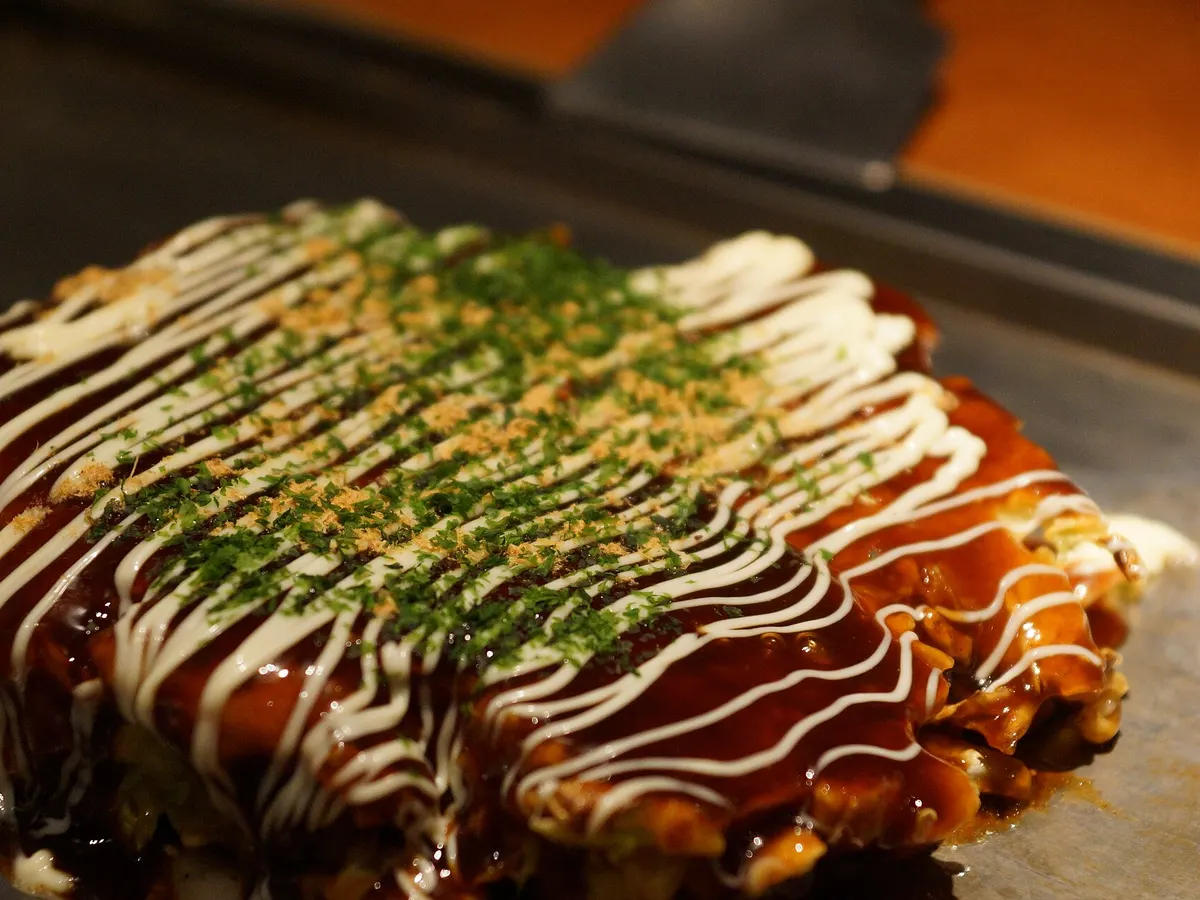
Cabbage okonomiyaki
Osaka's shredded-cabbage pancake, pan-cooked then covered in sweet-savoury sauce, mayonnaise and nori, here without dried bonito.
 Japan⏱ 50 min
Spaghetti squash sunomono
Strands of boiled, well-squeezed spaghetti squash dressed in sweetened rice vinegar, salt and a little soy sauce, a common way of eating it in Noto.
 Japan⏱ 20 min
Sunomono
Salted and squeezed cucumber tossed with wakame seaweed, dressed in sweetened rice vinegar and toasted sesame.
 Japan⏱ 20 min
Yudofu
Silken tofu warmed in kombu water and dipped in ponzu sauce, a winter dish from the temples of Kyoto.
 Japan⏱ 80 min
Sekihan
Glutinous rice stained pink by the cooking liquid of azuki beans, steamed and served with toasted sesame salt.
 Japan⏱ 40 min
Chawanmushi
Savoury egg custard steamed in a cup, scented with kombu and shiitake dashi, holding mushrooms and edamame.
 Japan⏱ 50 min
Kappamaki
Thin rolls of vinegared rice and cucumber wrapped in half a nori sheet, the plainest maki on any sushi counter.
 Japan⏱ 15 min
Spinach goma-ae
Blanched, well-squeezed spinach dressed in a toasted sesame paste, lightly sweetened and salted with soy sauce.
 Japan⏱ 30 min
Zaru soba
Ice-cold buckwheat noodles dipped into a kombu and shiitake sauce, with nori, spring onion and a dab of wasabi.
 Japan⏱ 70 min
Vegan ramen
This vegan ramen is a deep kombu, shiitake and miso broth with springy noodles, golden tofu, seared mushrooms and blanched pak choi.
 Japan⏱ 45 min
Vegetable onigiri
Warm triangles of Japanese rice filled with pickled vegetables and umeboshi, wrapped in a crisp strip of nori seaweed.
 Japan⏱ 25 min
Miso soup
A clear kombu broth with miso stirred in at the last moment, cubes of silken tofu and tender ribbons of wakame.
 Japan⏱ 25 min
Rolled Japanese omelette with chard
Tamagoyaki, the lightly sweet soy-seasoned rolled omelette, here enriched with finely shredded chard. It goes into a bento box.
 Japan⏱ 30 min
Agedashi tofu
Tofu that is crisp outside and silky inside, sitting in a sweet-savoury dashi broth with grated daikon and spring onion.
At a glance
| Measure | Value |
|---|---|
| Recipes on the site | 14 |
| Of which vegan | 11 |
| Of which gluten-free | 3 |
| Quickest | Spinach goma-ae, 15 min |
These recipes keep coming back to the same few things: tofu, eggs, rice, sesame.
Elsewhere in Asia: India, Thailand, Indonesia, China, Vietnam, South Korea, Sri Lanka, Nepal, Malaysia, Philippines.
Read more
- Umami without meat in China, Japan and Korea
Fermented pastes, kombu and dried shiitake, tofu and high heat — four sources of flavour that stand in for meat in Chinese, Japanese and Korean cooking.
- How to cook tofu so it is never bland
Why tofu is not a meat substitute but a carrier of flavour, and traditional Asian techniques to give it real depth and texture.
- Cooking rice for the dish you actually want
Four methods cover almost every rice dish. Which grain to pick, whether to rinse, how much water, what heat, and why the resting time matters.